Uyuni’s rainy-season mirror reflects entire constellations
A thin water layer turns the salt pan into a sky-level photograph, attracting astrophotographers who can walk “among” stars.
Share this fact
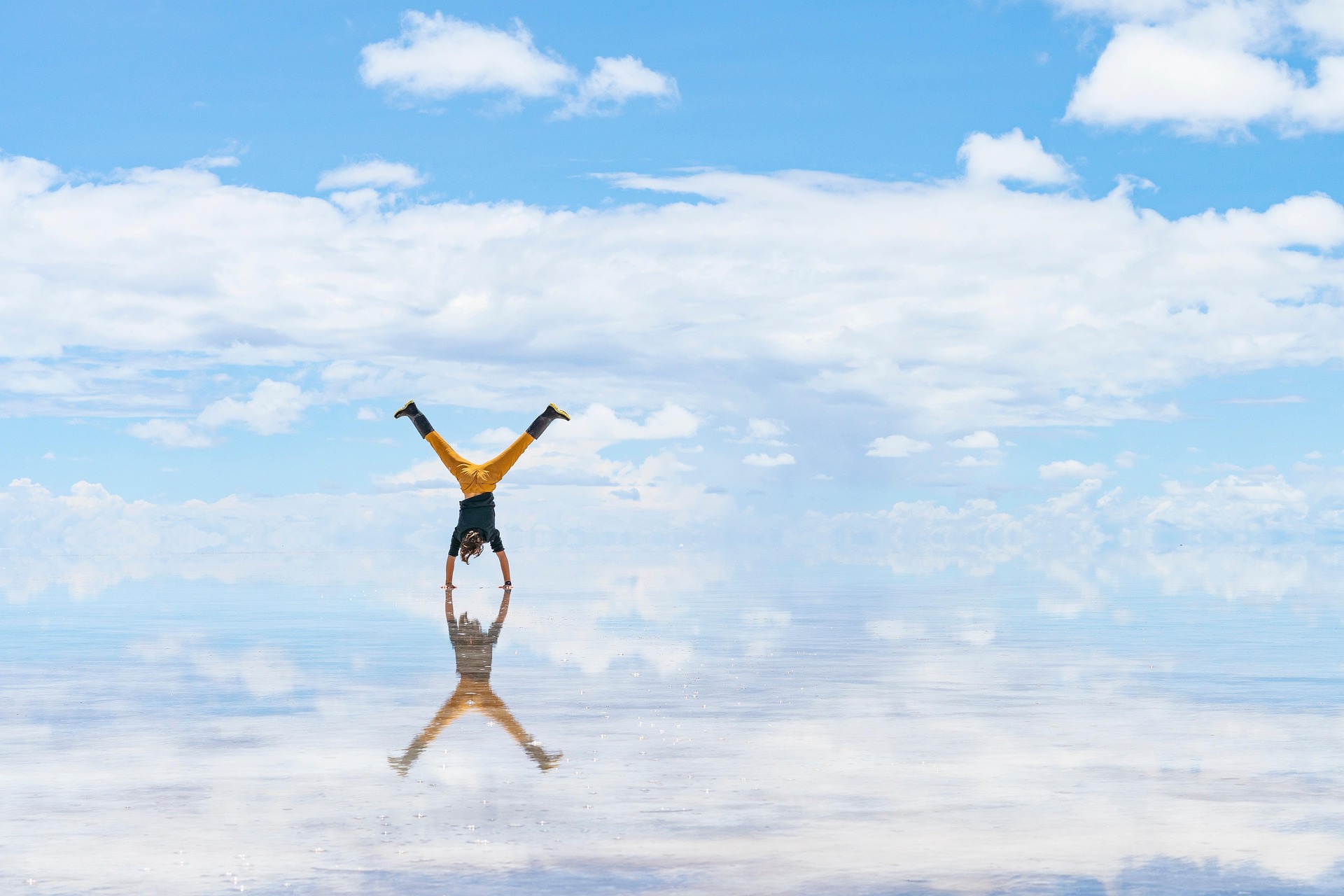
Guides drive about 45 minutes from Uyuni town to reach flood zones where standing water is only a few centimeters deep. A thin layer turns the world’s largest salt flat into a mirror so still that entire constellations—and the Milky Way core—reflect under your feet. You’ll wear rubber boots and follow a laser pointer to frame your shot while lightning flickers on the horizon and the horizon line itself seems to vanish.
Night temps drop below freezing and drain camera batteries fast, so bring spares and hand warmers. Even without cameras, travelers often describe mild disorientation: with no visible edge between sky and reflection, you feel as if you’re walking among the stars.
1. When the mirror appears—rainy season window
| Period | Water & mirror | Practical cue |
|---|---|---|
| Dec – early Jan | Rains begin; some pools but mirror still patchy and road access variable. | Book flexible dates; guides know which sectors have water. |
| Mid Jan – Mar | Peak mirror: thin, even water layer; horizon disappears, Milky Way reflects cleanly. | Best window for astro shots; reserve night tours in advance. |
| Apr – May | Water recedes; mirror breaks into pools, then dry salt again. | Still possible to find reflective spots; fewer crowds, cooler nights. |
2. Night-tour kit for the salar
- Footwear: Knee-high rubber boots (provided by most operators); the salt water is cold and can crack skin—avoid open shoes.
- Layers: Thermal base, fleece, windproof jacket; temps often sit around −5 to 0°C (23–32°F) after midnight at 3,656 m (12,000 ft).
- Camera: Spare batteries in an inner pocket (cold drains them); wide lens (14–24 mm) and sturdy tripod. Many guides carry a laser pointer to align the group and outline constellations.
- Extras: Headlamp with red mode to preserve night vision; hand warmers; a thermos with coca or herbal tea for the drive back.
- Altitude: Uyuni sits at 3,656 m. If you’ve just arrived from sea level, take it easy the first day and hydrate; the night tour is more comfortable once you’re acclimatized.
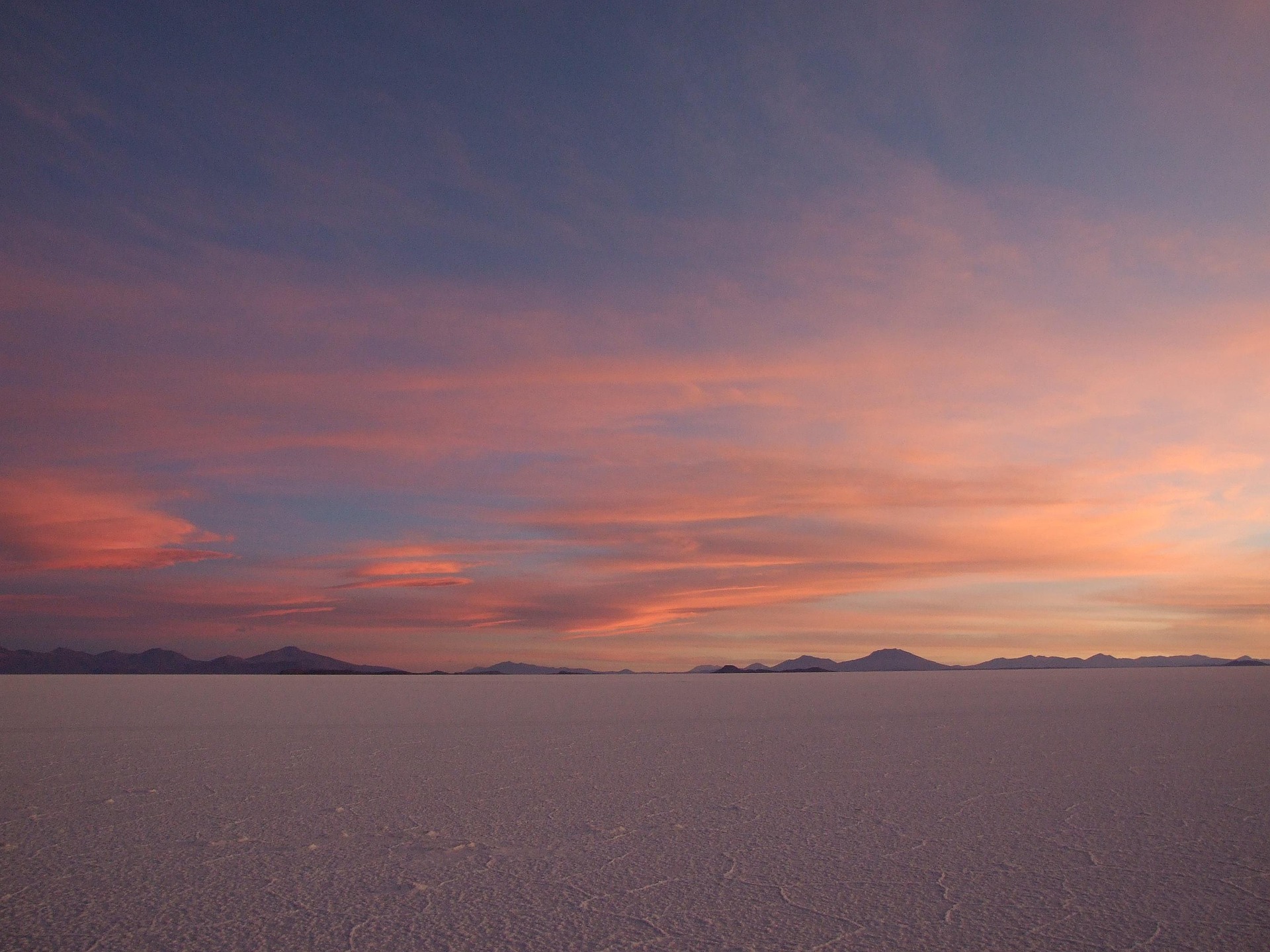
3. Framing the shot
- Placement: Guides choose a spot with even water depth and minimal tire tracks; follow their laser so you don’t step into deeper pools or crack the salt crust.
- Horizon: Stand so the real horizon crosses the frame roughly one-third from the top or bottom; the reflection will mirror the sky and create a perfect symmetry line.
- Milky Way: Core is most visible in the Southern Hemisphere from roughly April to September; in the rainy-season window (Jan–Mar) you still get a strong band and bright stars—ideal for “walking among stars” silhouettes.
- Exposure: Typical starting point: 15–25 s, f/2.8 or wider, ISO 3200–6400. Bracket and check the LCD; reduce time if stars start to trail.
- Silhouettes: Have someone walk or pose a few meters away with a faint light or no light; they’ll read as a figure “in” the reflection and add scale.
4. Quick FAQ
What’s the best month for the mirror? Mid January through March usually give the most consistent, even water layer and the strongest mirror effect.
Do I need a 4×4 or can I join a group? Almost everyone joins a guided tour from Uyuni (or a multi-day loop from Uyuni/La Paz). Driving on the salar alone is restricted and dangerous when wet; guides know safe routes and flood zones.
Is it safe to stand in the water? Yes—the layer is shallow and the salt is solid underneath. Boots protect from cold and minor cuts. Avoid walking where the crust is clearly broken or where the guide hasn’t pointed.
How long is the night tour? Usually 4–6 hours: drive out before sunset, blue hour and twilight shots, then 2–3 hours of astro before heading back. Dress for the whole stretch in the cold.
Altitude sickness? Uyuni is high. If you fly into La Paz or land in Uyuni from low altitude, plan at least one full day of light activity before a long night on the salar; drink water and avoid alcohol the first night.
5. Beyond the mirror—day and multi-day
- Daytime: In the dry season the same flat becomes a vast white hexagon pattern and “perspective” photos (people “holding” the sun or standing on a toy car) are classic. In rainy season, daytime tours still run to dry sectors and to islands like Incahuasi (giant cacti).
- Multi-day: Many operators combine one night on the mirror with lagoons (e.g. Laguna Colorada), flamingos, and high-altitude deserts; book 3–4 days if you want both the mirror and the full circuit.
- Dark sky: Even when the mirror isn’t at its peak, the salar is far from city lights—stargazing and Milky Way views are possible outside the strict Jan–Mar window if you’re flexible on the reflection.
6. Troubleshooting
- Issue: Horizon line still visible, reflection looks weak. Fix: You may be in a spot with uneven water or tire tracks; ask the guide to move to a calmer, flatter section.
- Issue: Stars are trailing in photos. Fix: Shorten shutter speed (e.g. 15–20 s at 14 mm); use the 500 rule as a starting point (500 / focal length ≈ max seconds).
- Issue: Batteries died. Fix: Keep spares in a pocket close to your body; cold kills capacity. Swap before they’re fully flat.
- Issue: Feeling dizzy or disoriented. Fix: Normal for some—no horizon can confuse the brain. Stand still, look at your feet or the guide’s light, and breathe slowly until it passes.
- Issue: Tour cancelled due to rain or flood. Fix: Rainy season can close access some nights; book with a operator that offers a backup (e.g. stargazing from dry salt or reschedule); have a flexible day in Uyuni if possible.