
Cooling oats overnight triples resistant starch
Chilling cooked oats for 12 hours reforms amylose chains, blunting next-morning glucose spikes by up to 25%.
Share this fact
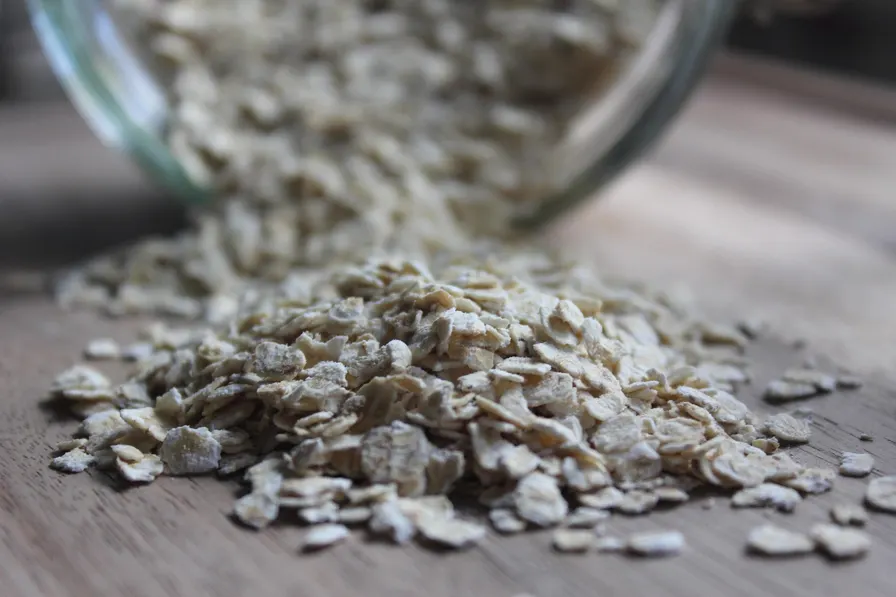
Cook rolled oats with extra water, let them cool, and refrigerate the batch. The retrogradation process forces starch molecules to crystallize into a form your small intestine barely absorbs.

Warm the oats gently with plant milk so the structure stays intact. Pair with chia seeds or nut butter to extend the slow-digesting effect and keep you full for four hours.
Athletes notice steadier energy on long training days when breakfast includes resistant starch plus 15 grams of protein.
1. Retrogradation timeline
| Clock | Starch change | Practical cue |
|---|---|---|
| 0–2 h (counter cool) | Gelatinized amylose begins aligning but is still digestible. | Spread oats in a shallow pan so heat leaves fast. |
| 2–12 h (fridge) | Hydrogen bonds lock, resistant starch (RS3) doubles to triples. | Keep jars toward the back of the fridge near 4°C. |
| 12–24 h (hold) | Structure stabilizes; no extra RS gains beyond 24 h. | Plan to eat or gently reheat within a day for best texture. |
2. Batch-build a cold starch kit
- Oat base: 2 cups rolled oats + 3 cups water + pinch of salt simmered 8 minutes.
- Cooling tray: Pour onto a stainless sheet, cool 30 minutes, then pack into jars.
- Flavor infusions: Stir in citrus peel, vanilla bean, or cardamom pods before refrigeration so the aroma sets while chilling.
- Protein boost: Portion 15 g pea or whey isolate into separate packets; whisk into reheated oats to blunt glucose further.
- Crunch toppers: Toast pumpkin seeds and coconut flakes; add only at serving so texture contrast remains.

3. Daily layering ideas
- Morning commute: Reheat with oat milk to 50°C, top with stewed blueberries and lemon zest for polyphenols that feed gut microbes.
- Post-run recovery: Stir in almond butter, hemp hearts, and a shake of cinnamon to replenish glycogen slowly.
- Desk lunch swap: Eat chilled with cucumber ribbons, tahini, and sesame oil for a savory bowl that still delivers RS.
- Evening snack: Blend half a cup into a smoothie with kefir, ginger, and frozen spinach for a prebiotic nightcap.
4. Quick FAQ
Can I freeze the oats? Freezing pauses retrogradation but doesn’t increase RS. Thaw in the fridge overnight before reheating.
Do steel-cut oats work? Yes; they need 24 hours to achieve the same RS boost because the grains are thicker.
What if I microwave to reheat? Use 50% power and stop at 60°C—hotter temps start reversing the RS back to digestible form.
How much water should I drink? Resistant starch still needs fluid to travel; aim for 500 ml water within two hours of eating.
Is it safe for low-FODMAP eaters? Portion to 1/2 cup cooked oats and add kiwi or pineapple (low FODMAP fruits) to keep the gut calm.
5. Biomarkers to monitor
- CGM trace: Expect the post-breakfast peak to drop 15–25%. If the curve is still steep, add more fat or protein to the bowl.
- Resting heart rate: A 1–2 bpm dip after consistent RS breakfasts shows parasympathetic tone improving.
- Satiety rating: Log hunger on a 1–10 scale every two hours; resistant starch should keep numbers under 5 until lunch.
- Stool score: Aim for Type 3–4 on the Bristol scale. If stool loosens, reduce portion or increase chia/flax.
- Workout output: Track RPE or pace during long runs; steadier energy indicates glycogen sparing from RS.
6. Troubleshooting diary
- Issue: Oats taste gummy. Fix: Add 1 tsp lemon juice before chilling to keep starch chains from clumping.
- Issue: Still get glucose spikes. Fix: Swap half the oats for barley or sorghum flakes to diversify fibers.
- Issue: Meal feels too cold in winter. Fix: Reheat to 60°C and top with warm roasted apples so comfort stays high.
- Issue: Texture separation after reheating. Fix: Whisk in a tablespoon of plant milk midway through warming.
- Issue: Time crunch mornings. Fix: Prep single-serving silicone cubes; pop one into a bowl and microwave for 60 seconds at 50% power.